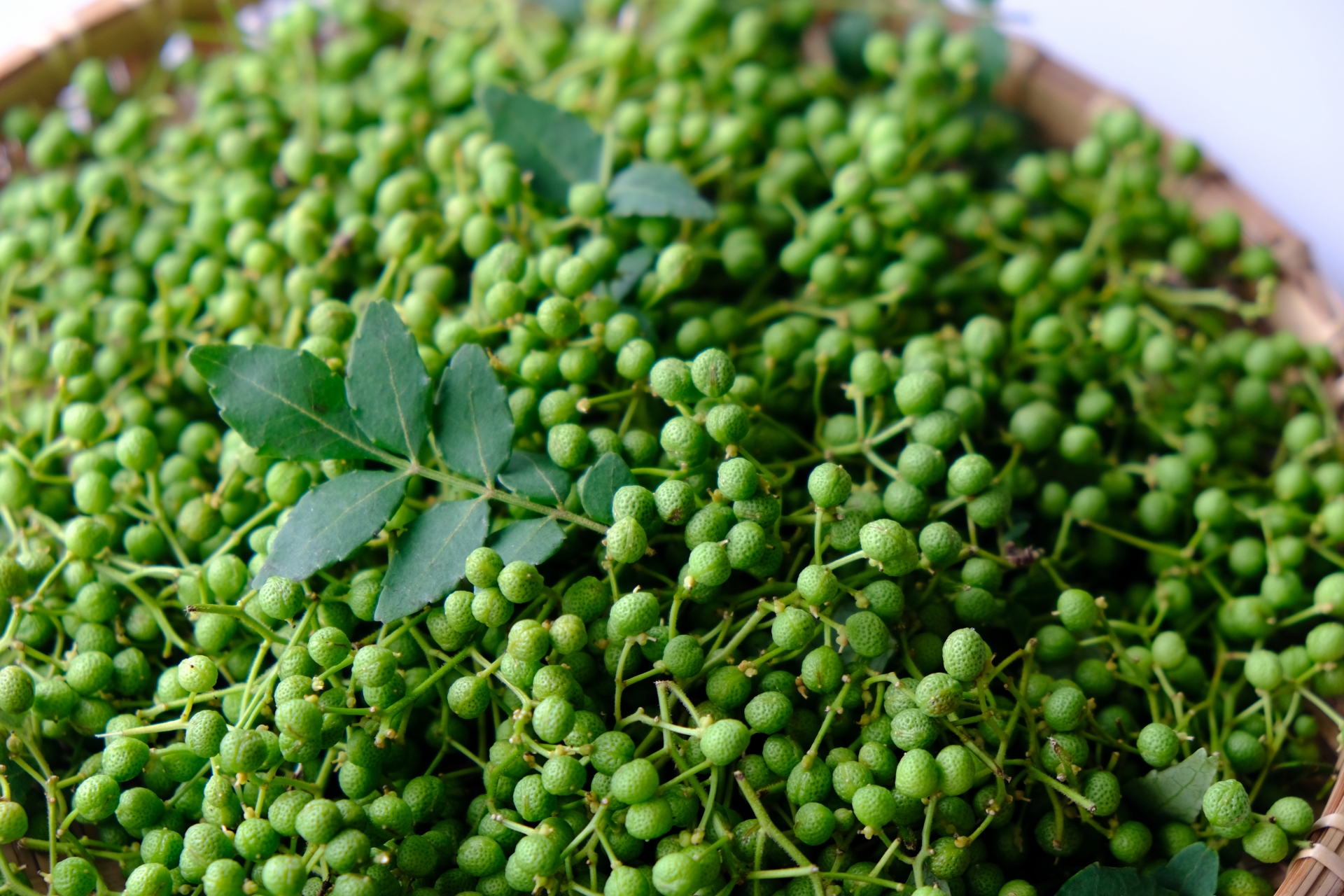
Delicate yet bold, refreshing yet spicy—sansho (Japanese pepper) is a seasoning that quietly shapes the flavor profile of traditional Japanese cuisine. Though often used sparingly, its distinctive aroma and tingling sensation can transform a dish, adding both depth and brightness.
As spring arrives, the young buds of the sansho plant—known as kinome—begin to sprout, signaling the season’s change. These tender leaves, with their citrus-like fragrance, are a beloved springtime ingredient in Japanese cooking.
More Than Just Spice: Layers of Flavor and Fragrance
Sansho is celebrated not just for its sharp, tongue-tingling kick, but also for its refreshing, almost citrusy aroma. Different parts of the plant are used in various ways, each offering its own contribution to the dining experience.
In kaiseki cuisine, sansho is more than just a spice—it plays a quiet but vital role in balancing a dish. Its refreshing aroma and subtle tingling heat enhance flavors and awaken the senses.
In spring, kinome adds not only a gentle citrusy note, but also a sense of season and refinement to the presentation. Whether used as a garnish or subtle accent, sansho brings harmony—cutting through richness, deepening mild flavors, and leaving a clean, elegant finish.
A Quiet Accent in Takeda’s Seasonal Cuisine
At Takeda, we sometimes incorporate sansho—especially kinome—into our spring dishes, whether layered discreetly beneath a piece of seasonal fish or added as a final aromatic touch.
It’s a spice that doesn’t demand attention but rewards those who notice. In Japanese cuisine, this kind of restraint is intentional: a single leaf or pinch of spice can shift the entire impression of a dish, reflecting the harmony and depth of the season.
