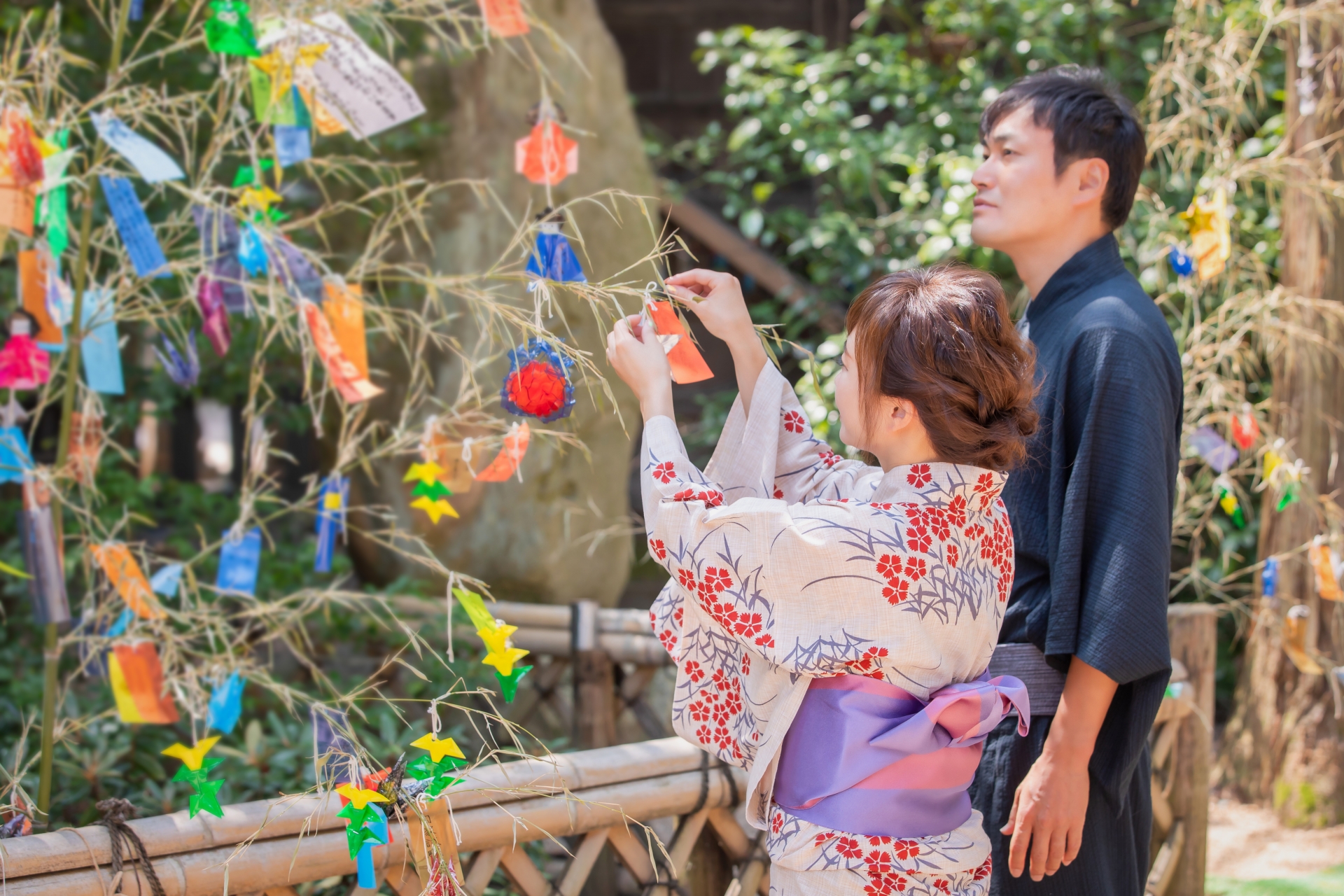
Every year on July 7, Japan celebrates Tanabata, or the Star Festival, inspired by an ancient romantic legend. The story follows Orihime, the weaving princess, and Hikoboshi, the cowherd, who are separated by the Milky Way. They are allowed to meet just once a year—on the night of Tanabata, if the skies are clear. This tale of longing and reunion gives Tanabata its poetic and emotional heart.
A Night of Wishes
One of the most cherished customs of Tanabata is writing wishes on small, colorful slips of paper called tanzaku and tying them to bamboo branches. The hopes range from personal dreams to messages of peace and happiness. The bamboo sways in the summer breeze, carrying these wishes toward the stars.
In many places across Japan, public spaces are filled with decorative bamboo, streamers, and paper ornaments. Some cities, like Sendai, are famous for their elaborate Tanabata festivals, featuring grand displays, music, and food stalls.
A Summer Mood
Tanabata also marks the height of summer. With warm evenings, gentle breezes, and the sound of cicadas, the festival evokes a deeply nostalgic mood for many in Japan. Seasonal treats like sōmen noodles—light and refreshing—are often enjoyed during this time, sometimes arranged to resemble flowing stars.
More Than Just a Festival
While Tanabata is rooted in folklore, it’s also about slowing down, reflecting, and expressing hope. Whether you’re making a wish, enjoying a summer night, or simply admiring the decorations, Tanabata invites you to connect with something timeless.
