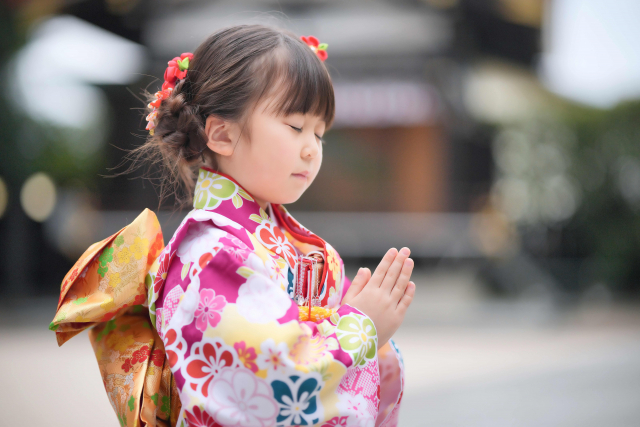
As autumn deepens in Japan, families across the country celebrate Shichi-Go-San, a traditional event that honors the healthy growth of children. Around November 15, shrines fill with families dressed in beautiful kimonos, marking one of the most heartwarming scenes of the Japanese fall season.
What Is Shichi-Go-San?
The name Shichi-Go-San literally means “seven, five, and three.”
It’s a celebration for children at these ages—girls at three and seven, and boys at three and five—to express gratitude for their growth and to pray for continued good health.
In earlier times, when infant mortality was high, this milestone was deeply significant for families, symbolizing both survival and hope for the future.
Children wear traditional clothing—kimono for girls and hakama for boys—and visit a Shinto shrine with their families. The sight of young girls in elegant kimono and ornate hair ornaments is particularly iconic, embodying the grace and beauty of Japan’s autumn traditions.
The Meaning Behind Chitose Ame
A hallmark of Shichi-Go-San is Chitose Ame, or “thousand-year candy.” These long, thin sticks of red and white candy represent wishes for a long, happy, and healthy life.
They are sold in colorful paper bags adorned with cranes, turtles, and pine motifs—all traditional symbols of longevity and good fortune—reflecting Japan’s timeless sense of beauty and symbolism.

A Day of Family and Gratitude
Today, Shichi-Go-San is not only a shrine visit but also a day for family gatherings, photography, and celebration. Many families enjoy a special meal together, sharing joy and pride in their child’s growth.
More than just a children’s event, it’s a reminder of the bonds that tie generations together—a moment of gratitude for life, family, and tradition.
