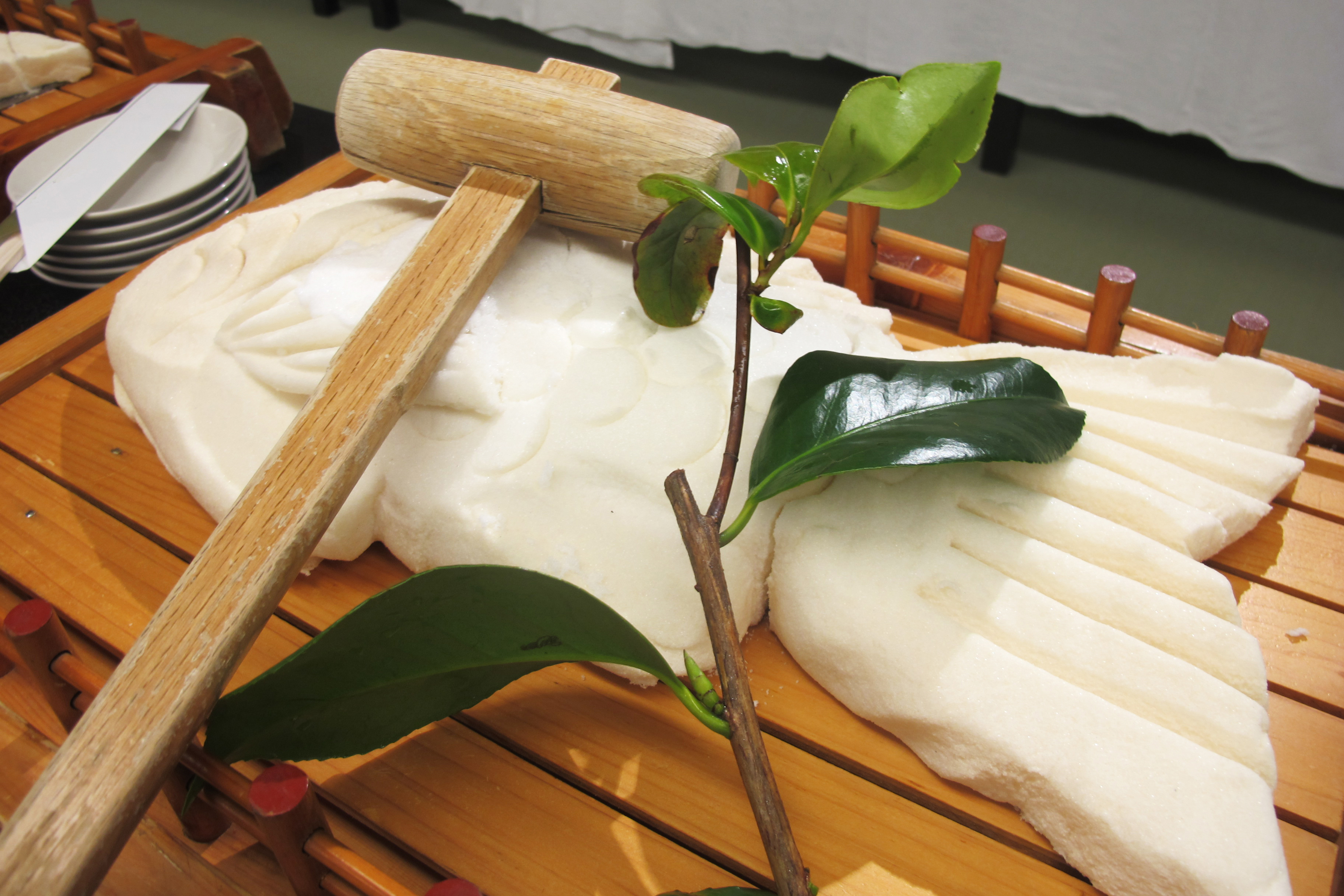
Japan has many techniques to enhance natural flavors, and shio-gama yaki, or salt-crust baking, is one of the most striking. This method seals in moisture and intensifies umami, creating a tender, flavorful dish.
What is Shio-gama Yaki (salt-crust baking) ?
Shio-Gama yaki involves coating fish or meat in salt and slow-roasting it. The salt crust traps moisture, keeping the ingredients juicy while subtly enhancing flavor.
While salt-crust cooking exists in European cuisine, in Japan, it is often used for special occasions and traditional meals.
The Benefits of This Cooking Method
One of the key advantages of shio-kama yaki is its ability to lock in moisture, ensuring a tender and juicy texture. Despite being encased in salt, the dish does not become overly salty, as it absorbs only the right amount.
Additionally, the method allows for gentle aroma infusion, as herbs and spices in the salt enhance the dish’s natural flavors. Beyond taste, its dramatic presentation adds to the experience—breaking open the hardened salt crust reveals a perfectly cooked dish, making it a favorite for celebrations.

Cultural Significance in Japan
Salt has long been a symbol of purification in Japan. Covering an ingredient in salt was believed to preserve its essence.
A classic example is tai no shio-gama yaki (salt-crusted sea bream), often served at celebratory events. The word “tai” sounds like “medetai” (meaning auspicious), making it a symbolic dish.
Though traditionally used for fish, this method has expanded to include meat, vegetables, and modern variations, keeping its relevance in Japanese cuisine.
A Timeless Culinary Tradition
Shio-gama yaki reflects Japanese culinary philosophy—enhancing flavors through simplicity and technique.
By preserving moisture, enriching taste, and creating a unique presentation, this traditional method continues to captivate and impress.