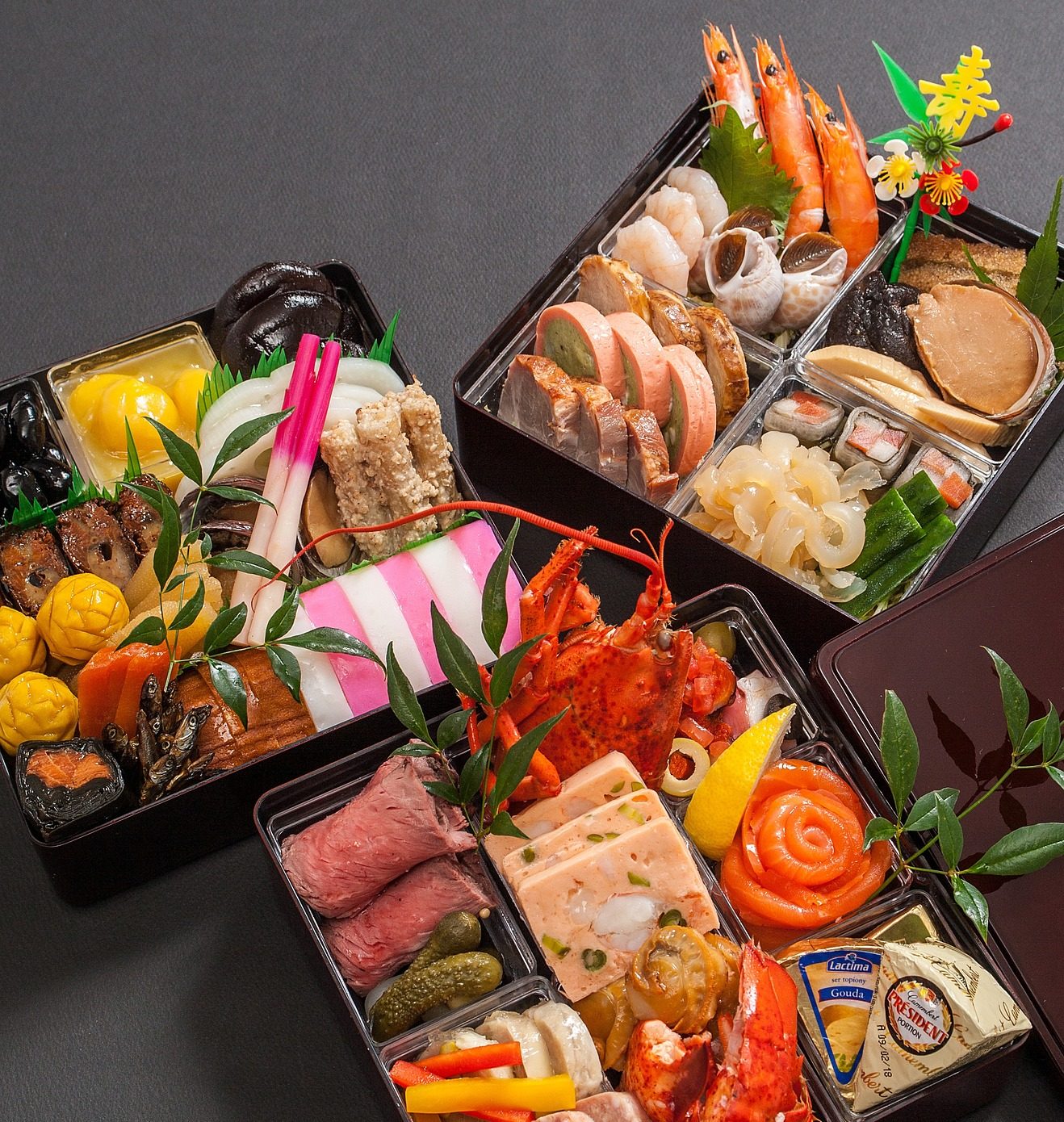
“Oshogatsu,” or the New Year celebration, is one of the most important traditions in Japanese culture. It’s a special time to reflect on the past year and pray for good fortune and health in the coming year, surrounded by family and cherished customs. This article explores the traditions of Oshogatsu and the delicious Osechi-ryori that plays a central role in the festivities.
The Beginning of Oshogatsu: New Year’s Eve
Oshogatsu begins on December 31st with “Omisoka,” or New Year’s Eve. A key tradition is listening to the solemn sound of the “Joya no Kane,” a temple bell rung 108 times to purify people of their earthly desires (bonno).
In New York, you can visit Japanese temples that host this ritual to experience its serene and spiritual atmosphere. It’s a perfect way to end the year with a clear mind.
The Highlight of Oshogatsu: Osechi-Ryori
A centerpiece of Oshogatsu is “Osechi-ryori,” a traditional assortment of beautifully arranged dishes. Each dish carries a special meaning, symbolizing hopes and blessings for the new year.
Popular Osechi Dishes:
- Kuromame (Black Beans): Represents health and longevity.
- Kazunoko (Herring Roe): A wish for prosperity and many descendants.
- Datemaki (Rolled Omelet): Symbolizes wisdom and academic success.
If preparing Osechi at home seems daunting, you’re in luck!

Hatsumode – A New Year’s Prayer
Between January 1st and 3rd, people in Japan visit shrines or temples for “Hatsumode,” the first prayer of the year. Visitors pray for health, success, and happiness, and often purchase lucky charms or amulets.
Oshogatsu is a wonderful opportunity to reflect on the past, set intentions for the future, and embrace a fresh start. We wish you all a happy and prosperous 2025!
We look forward to celebrating together with you at TAKEDA.
Sincerely,
The TAKEDA Team